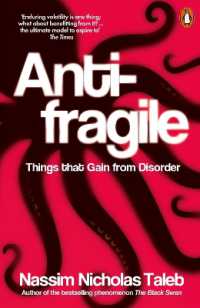
Antifragile: Things That Gain from Disorder
In Antifragile, Nassim Nicholas Taleb introduces one of the most groundbreaking concepts in modern thinking: antifragility. This third volume in Taleb’s Incerto series (following Fooled by Randomness and The Black Swan) presents a revolutionary framework for understanding how some things not only withstand chaos and disorder but actually benefit and grow stronger from it.
The Central Concept: Antifragility
Taleb’s core insight is that there are three categories of response to disorder and volatility:
Fragile
Fragile things are hurt by volatility, stress, and disorder. They prefer stability and predictability but break when faced with unexpected shocks.
Robust (or Resilient)
Robust things are neither helped nor hurt by volatility. They can withstand stress and disorder but don’t gain from it.
Antifragile
Antifragile things actually benefit from volatility, stress, and disorder. They grow stronger, more capable, and more resilient when exposed to these conditions.
This distinction is fundamental to understanding how systems, organizations, and individuals can thrive in an unpredictable world.
The Triad: Fragile, Robust, Antifragile
The Fragile
Taleb explains that fragile things:
- Have more to lose than to gain from disorder
- Hide risks and are harmed by volatility
- Prefer predictability and control
- Are often ruined by stressors
- Have a non-linear response to stress (small stressors cause disproportionate damage)
Examples include:
- Delicate objects like porcelain
- Over-optimized systems
- Centralized organizations
- Fragile financial instruments
The Robust
Robust things:
- Are neutral to disorder
- Can withstand stress and volatility
- Maintain their function under pressure
- Neither gain nor lose from stressors
- Return to baseline after stress
Examples include:
- Well-built infrastructure
- Basic insurance policies
- Simple mechanical systems
The Antifragile
Antifragile things:
- Have more to gain than to lose from disorder
- Improve when exposed to stressors
- Require some level of volatility to thrive
- Learn and adapt from stress
- Have a non-linear positive response to stress (small stressors provide disproportionate benefits)
Examples include:
- Evolution and natural selection
- Immune systems
- Muscles that grow stronger with resistance
- Markets that adapt to changes
- Trial-and-error learning
The Problem with Modern Systems
Taleb argues that modern society has become increasingly fragile by trying to eliminate all volatility and disorder:
The Illusion of Control
Modern systems attempt to control and predict everything, but this often backfires:
- Over-engineering creates hidden vulnerabilities
- Eliminating small stresses leads to catastrophic failures
- Centralization concentrates risks
- Over-reliance on models and predictions
The Soviet-Harvard Illusion
Taleb introduces this concept to describe the belief that we can understand and control complex systems. He argues this approach is fundamentally flawed because:
- Complex systems are inherently unpredictable
- Interventions often have unintended consequences
- Top-down control often weakens natural resilience
The Fragilista
Taleb coins this term for people who fragilize systems in the name of improvement:
- Consultants who over-optimize businesses
- Policy makers who create rigid regulations
- Engineers who eliminate all redundancy
- Academics who oversimplify complex phenomena
The Benefits of Disorder
Taleb argues that disorder, stress, and volatility are not just unavoidable but actually beneficial:
Evolution Through Stress
- Biological evolution requires genetic stress and mutation
- Stressors drive adaptation and improvement
- Without challenges, systems become weak and stagnant
- Randomness and disorder are sources of innovation
Learning Through Trial and Error
- Practical knowledge comes from experimentation
- Mistakes provide valuable information
- Theoretical knowledge is limited without real-world testing
- Skin in the game is essential for learning
The Role of Variability
- Variability provides options and opportunities
- Diversity increases resilience
- Standardization creates vulnerabilities
- Local knowledge is more valuable than abstract theories
The Barbell Strategy
One of Taleb’s key practical recommendations is the “barbell strategy”:
Definition
This approach involves combining:
- Maximum safety and stability on one side
- Maximum risk-taking and exposure on the other side
- Eliminating the middle ground of moderate risk
Applications
- Investment: 90% in safe assets, 10% in highly speculative but capped investments
- Career: Stable job plus high-risk side projects
- Health: Basic healthy habits plus occasional intense physical challenges
- Learning: Core foundational knowledge plus exploration of fringe ideas
Benefits
- Limits downside risk while maintaining upside potential
- Creates antifragility through diversification
- Avoids the fragility of moderate approaches
- Allows for learning from both safety and risk
Skin in the Game
Taleb emphasizes the importance of “skin in the game” - having personal exposure to the risks and rewards of decisions:
The Principle
- Decision-makers should bear the consequences of their choices
- Without skin in the game, people make reckless decisions
- Accountability drives better risk assessment
- Incentives must be aligned with outcomes
Examples
- Good: Entrepreneurs who risk their own capital
- Bad: Bankers who profit from gains but are protected from losses
- Good: Physicians who face malpractice liability
- Bad: Consultants who recommend risky strategies without personal exposure
Applications
- Corporate governance
- Political decision-making
- Financial regulation
- Academic research
- Public policy
The Ethics of Antifragility
Taleb explores the ethical implications of fragility and antifragility:
Individual Responsibility
- People should take responsibility for their own fragility
- Society should not bail out those who fragilize systems
- Personal resilience is a moral imperative
- Self-reliance is virtuous
System Design
- Systems should be designed to be antifragile
- Centralized systems concentrate risks
- Distributed systems distribute and reduce risks
- Redundancy and diversity increase resilience
The Precautionary Principle
Taleb advocates for a stronger version of the precautionary principle:
- Avoid actions with systemic risks
- Small harm is acceptable, but ruin is not
- Complex interventions require extreme caution
- Nature and tradition contain valuable wisdom
Practical Applications
Taleb provides numerous examples of how to apply antifragility principles:
Personal Life
- Physical Health: Regular exercise with varied stressors
- Mental Health: Exposure to challenges and setbacks
- Career: Developing multiple skills and income sources
- Learning: Embracing mistakes and feedback
Business and Economics
- Entrepreneurship: Startups are more antifragile than large corporations
- Market Systems: Free markets adapt to changes
- Innovation: Trial and error beats top-down planning
- Risk Management: Distributed risks beat concentrated risks
Politics and Governance
- Decentralization: Local solutions are more adaptable
- Subsidiarity: Decisions should be made at the lowest appropriate level
- Constitutional Limits: Constraints on power prevent fragilization
- Traditional Wisdom: Respect for time-tested institutions
Technology and Innovation
- Evolutionary Design: Iterative improvement beats grand planning
- Redundancy: Multiple backup systems increase reliability
- Simplicity: Simple systems are more robust
- Open Source: Distributed development is more resilient
The Concept of Via Negativa
Taleb emphasizes the power of subtraction over addition:
Definition
Instead of adding solutions, remove sources of fragility:
- Eliminate unnecessary complexity
- Remove harmful interventions
- Reduce exposure to risks
- Simplify systems
Applications
- Healthcare: Remove harmful treatments rather than adding more drugs
- Government: Reduce regulations that create fragility
- Business: Eliminate processes that add risk
- Personal Life: Remove stressors rather than adding coping mechanisms
Criticisms and Limitations
Taleb acknowledges potential criticisms of his approach:
Practical Implementation
- The barbell strategy may be difficult to implement
- Not all situations allow for clear antifragile approaches
- Trade-offs between short-term and long-term benefits
- Cultural and institutional barriers to change
Conceptual Challenges
- The definition of antifragility can be ambiguous
- Difficulty in measuring antifragility in complex systems
- Potential for misapplication of the concept
- Tension between individual and collective interests
Related Concepts
The Black Swan
This builds on Taleb’s earlier work on rare, high-impact events:
- Antifragile systems benefit from Black Swans
- Fragile systems are ruined by Black Swans
- Understanding uncertainty is key to antifragility
Fooled by Randomness
This earlier work on the role of chance in life:
- Randomness creates the stressors that drive antifragility
- Misunderstanding randomness leads to fragilization
- The importance of distinguishing skill from luck
Lindy Effect
The concept that the future life expectancy of some things is proportional to their current age:
- Time-tested systems are likely to continue
- Antifragile systems survive and thrive over time
- Novelty can be fragile
The Broader Implications
For Society
- We need to redesign systems to be antifragile
- Centralized control should be minimized
- Local knowledge and diversity should be valued
- Tradition and evolution should be respected
For Individuals
- Personal resilience should be prioritized
- Career and financial strategies should embrace the barbell approach
- Learning should involve trial and error
- Risk-taking should be intelligent and measured
For Policy Makers
- Regulations should avoid creating hidden fragilities
- Interventions should be minimal and reversible
- Systems should be allowed to adapt naturally
- Decision-makers should have skin in the game
Conclusion
Antifragile presents a revolutionary way of thinking about how we approach risk, uncertainty, and resilience in our personal lives, businesses, and society. Taleb’s central insight—that some things benefit from disorder while others are harmed by it—challenges conventional wisdom about safety, control, and optimization.
The book’s enduring value lies in its practical insights for navigating an increasingly complex and uncertain world. By understanding the difference between fragile, robust, and antifragile systems, readers can make better decisions about how to structure their lives, organizations, and policies.
Taleb’s emphasis on skin in the game, the barbell strategy, and the power of disorder provides a framework for building resilience and even thriving in the face of uncertainty. His critique of over-engineering, centralization, and the illusion of control offers a compelling alternative to conventional approaches to risk management.
Whether you’re an entrepreneur seeking to build a more resilient business, a policy maker trying to create more stable institutions, or an individual looking to become more adaptable in your personal life, Antifragile provides valuable insights for thriving in our volatile world.
The book ultimately encourages readers to embrace uncertainty rather than fear it, to see stress and volatility as opportunities rather than threats, and to build systems and lives that grow stronger through challenge rather than weaker from it.
In a world increasingly characterized by complexity, uncertainty, and rapid change, Taleb’s concept of antifragility offers a powerful lens for understanding how to not just survive but actually benefit from disorder. It’s a call to rethink our approaches to risk, resilience, and robustness in ways that can transform how we live, work, and organize our societies.