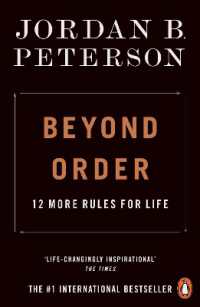
Beyond Order: 12 More Rules for Life
Beyond Order: 12 More Rules for Life is the highly anticipated companion to Jordan B. Peterson’s #1 bestselling phenomenon 12 Rules for Life. While the first book focused on navigating chaos and establishing order in our lives, Beyond Order explores what happens when we successfully implement those principles and move beyond mere order to create something more meaningful and purposeful.
The Journey from Chaos to Order to Beyond Order
Peterson’s framework recognizes that life is a constant dance between chaos and order. Chaos represents the unknown, the unpredictable, and the creative potential that exists outside our current understanding. Order represents the known, the structured, and the stable systems we create to navigate the world.
In 12 Rules for Life, Peterson provided guidance for moving from chaos toward order, establishing the foundational principles needed for psychological stability and personal responsibility. Beyond Order takes this journey further, exploring what emerges when we have successfully established order in our lives and are ready to move beyond it toward something greater.
The Twelve New Rules
Rule 1: Do not carelessly denigrate social institutions or artistic achievement
Peterson argues that we should not casually dismiss the institutions and cultural achievements that have evolved over millennia. While they may have flaws, they represent humanity’s accumulated wisdom and should be approached with respect and careful consideration before criticism.
Rule 2: Imagine who you could become and then aim single-mindedly at that
This rule emphasizes the importance of envisioning our ideal future selves and pursuing that vision with unwavering focus. Peterson explains how having a clear destination gives meaning to our present efforts and helps us persist through difficulties. This principle is central to the Hero’s Journey Framework.
Rule 3: Once you have decided where you are going, allow yourself to be supported by the world
Having established a clear direction, we should trust that the world will support our efforts if we are genuinely committed to a meaningful goal. This requires faith in the underlying structure of reality and our place within it.
Rule 4: Do not allow yourself to become arrogant or resentful
Success can breed arrogance, while setbacks can foster resentment. Peterson explains how to maintain humility in achievement and avoid bitterness in difficulty, preserving our capacity for growth and genuine relationships.
Rule 5: Work as hard as you possibly can on at least one thing and see what happens
This rule emphasizes the power of focused effort. By dedicating ourselves fully to a meaningful task, we can discover capabilities we didn’t know we possessed and create opportunities we couldn’t have anticipated.
Rule 6: When you are listening to someone, try to understand what they are saying before you respond
True communication requires genuine listening. Peterson explores how understanding others’ perspectives can expand our own understanding and lead to more meaningful connections.
Rule 7: Treat yourself and others as if you and they were capable of transformation
This rule emphasizes the fundamental human capacity for change and growth. By approaching ourselves and others with this transformational mindset, we create the conditions for actual transformation to occur.
Rule 8: Do not try to rescue someone who does not want to be rescued and be very careful about rescuing someone who does
Peterson discusses the importance of respecting others’ autonomy and the dangers of both enabling dependency and overstepping boundaries in attempts to help.
Rule 9: Understand that what you really want in the long run may not be what you want right now
This rule addresses the conflict between short-term desires and long-term goals. Peterson explains how to develop the wisdom to prioritize future well-being over immediate gratification.
Rule 10: If you are not the hero of your story, you are likely playing the villain
Taking responsibility for our lives means seeing ourselves as the protagonists of our own stories rather than victims of circumstance. This perspective, central to the Hero’s Journey Framework, empowers us to make meaningful changes.
Rule 11: Be grateful in spite of your suffering
Gratitude is not dependent on perfect circumstances. Peterson explores how cultivating gratitude practices even in difficult times can transform our relationship with suffering and enhance our resilience.
Rule 12: Clean up your life
The final rule returns to the foundational principle of personal responsibility. Before attempting to change the world, we must first put our own lives in order.
Key Themes
The Structure of Reality
Peterson explores how the principles that govern the universe also govern our psychological and social lives. Understanding these patterns can help us navigate existence more effectively.
Meaning and Purpose
The book emphasizes that meaning emerges from the intersection of personal responsibility, social contribution, and individual development. It’s not something we find but something we create through our actions.
The Hero’s Journey
Drawing on mythological and psychological insights, Peterson explains how each person must undertake their own hero’s journey, facing challenges and transforming themselves in the process.
The Importance of Discipline
Discipline is not about restriction but about channeling our energies toward meaningful goals. Peterson shows how self-imposed structure creates the conditions for freedom and creativity.
The Balance Between Order and Chaos
Rather than seeking absolute order or chaos, Peterson advocates for maintaining a dynamic balance that allows for both stability and growth.
Psychological Insights
The Role of the Unconscious
Peterson discusses how unconscious processes influence our behavior and how becoming aware of them can lead to greater self-understanding and intentional living.
The Importance of Narrative
Our lives are shaped by the stories we tell about ourselves. Learning to craft empowering narratives is essential for psychological health and personal growth.
The Power of Incremental Change
Transformation doesn’t require dramatic upheavals. Small, consistent changes can lead to profound transformations over time.
Philosophical Foundations
Individual Responsibility
Peterson emphasizes that we are responsible for our own lives and cannot blame external circumstances for our failures to act or grow.
The Value of Tradition
While not blindly accepting tradition, Peterson argues for respecting the accumulated wisdom of previous generations while remaining open to necessary change.
The Necessity of Suffering
Suffering is an inevitable part of existence, but it can also be a source of growth and wisdom when approached with the right attitude.
Practical Applications
Personal Development
The rules provide concrete guidance for self-improvement, from setting meaningful goals to maintaining healthy relationships.
Professional Success
By applying these principles, readers can develop the character traits and habits that lead to professional achievement and fulfillment.
Social Contribution
Peterson emphasizes that personal development should ultimately serve the broader community, creating a positive feedback loop between individual and collective well-being.
The Integration of Science and Wisdom
One of Peterson’s strengths is his ability to integrate findings from psychology, neuroscience, and biology with insights from mythology, religion, and philosophy. This interdisciplinary approach provides a more complete understanding of human nature and how to live well.
Criticisms and Controversies
While widely praised, Peterson’s work has also faced criticism:
- Some argue his emphasis on individual responsibility minimizes the impact of systemic factors
- Others question his interpretation of psychological research
- His political views have generated significant debate
Peterson addresses these concerns by emphasizing that his approach is not about ignoring external factors but about focusing on what we can control.
Conclusion
Beyond Order: 12 More Rules for Life offers a sophisticated and challenging vision of how to live meaningfully in an uncertain world. Building on the foundation established in 12 Rules for Life, this book provides guidance for those ready to move beyond basic stability toward genuine fulfillment and contribution.
The twelve new rules are not simple prescriptions but profound principles that require deep reflection and consistent practice. They challenge readers to take full responsibility for their lives, engage authentically with others, and contribute meaningfully to the world.
By implementing these rules, readers can:
- Develop a clearer sense of purpose and direction
- Build stronger, more authentic relationships
- Navigate life’s inevitable challenges with greater resilience
- Create something valuable that extends beyond themselves
- Find meaning even in the face of suffering
Ultimately, Beyond Order is about transcending the basic need for security and stability to pursue something greater: a life of meaning, purpose, and genuine contribution to the world. It’s a challenging but rewarding journey that Peterson guides us through with wisdom, compassion, and unwavering commitment to the highest possibilities of human development.
Core Concepts and Frameworks
To deepen your understanding of Peterson’s advanced philosophy in Beyond Order, explore these key concepts that underlie the twelve new rules:
Hero’s Journey Framework
The archetypal pattern of personal transformation that combines envisioning your ideal future self with taking responsibility as the protagonist of your own story.
Transformational Mindset
The fundamental belief that you and others possess the capacity for genuine change, growth, and development throughout life.
Focused Excellence
The practice of dedicating maximum effort to at least one meaningful pursuit to discover your capabilities and create unexpected opportunities.
Gratitude Practice
The cultivation of appreciation even during difficult circumstances, transforming your relationship with suffering and enhancing resilience.
These concepts provide the philosophical foundation for moving beyond basic order toward genuine meaning, purpose, and transformation—the central promise of Peterson’s advanced teachings.