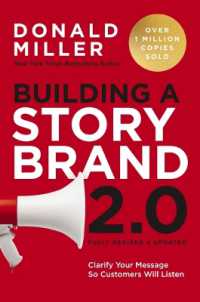
Building a StoryBrand 2.0: Clarify Your Message So Customers Will Listen
Building a StoryBrand 2.0 by Donald Miller is a comprehensive guide to creating powerful brand messaging that cuts through the noise and drives customer engagement. This updated edition builds on Miller’s groundbreaking original work, incorporating new insights, tools, and case studies for applying the StoryBrand framework in today’s complex marketing landscape.
The Core Premise: Customers Are the Heroes
Miller’s central argument is that businesses waste enormous resources on confusing messaging that doesn’t resonate with customers. The solution is to position customers as the heroes of their own stories, with the brand serving as a guide who helps them achieve their goals. This approach leverages the power of storytelling to create clear, compelling messages that drive action.
The Marketing Noise Problem
Miller identifies a fundamental problem in modern marketing:
- Customers are bombarded with thousands of marketing messages daily
- Most business messaging is confusing or self-focused
- Companies spend billions on advertising that doesn’t work
- Customers struggle to understand what businesses actually do
The StoryBrand Solution
The StoryBrand framework solves this problem by:
- Using the ancient power of storytelling to organize messaging
- Positioning customers as heroes rather than observers
- Creating clear roles for both customer and brand
- Following a proven narrative structure that drives engagement
The StoryBrand Framework: Seven Universal Story Points
Miller’s framework is based on the seven universal story points that appear in successful stories across cultures and time periods:
1. A Character (The Customer)
Every story needs a character who wants something. In business, the customer is the hero of their own story:
- Customers have desires, dreams, and aspirations
- They face challenges and obstacles to achieving their goals
- They want to be understood and validated
- They’re looking for solutions to their problems
2. Has a Problem
The hero encounters a problem that’s preventing them from achieving their goal:
- External Problems: Practical challenges and obstacles
- Internal Problems: Frustration, fear, and self-doubt
- Philosophical Problems: Deeper questions about meaning and purpose
3. Meets a Guide (Your Brand)
The customer meets a guide who helps them solve their problem:
- The guide is empathetic and authoritative
- The guide has overcome similar challenges
- The guide provides a clear path forward
- The guide removes obstacles and increases success
4. Who Gives Them a Plan
The guide provides a plan to help the hero overcome their challenges:
- Process Plans: Steps the customer needs to take
- Agreement Plans: Clear agreements about what the brand will do
- The plan reduces confusion and increases confidence
5. And Calls Them to Action
The guide calls the hero to take specific action:
- Direct Calls to Action: Explicit requests to buy or engage
- Transitional Calls to Action: Steps that lead toward the main action
- Clear calls to action eliminate decision paralysis
6. That Helps Them Avoid Failure
The story highlights what happens if the hero fails to act:
- Stakes: What the customer stands to lose
- Negative Consequences: The cost of inaction
- Fear of Failure: Emotional motivation to act
7. And Ends in Success
The story concludes with the hero achieving success:
- Positive Outcomes: What the customer gains
- Transformation: How the customer is changed
- Celebration: The fulfillment of the customer’s desires
Applying the Framework to Business
Clarifying Your Message
The StoryBrand framework helps businesses clarify their messaging by:
- Identifying the Customer’s Core Problem: Understanding what really holds customers back
- Positioning the Brand as Guide: Shifting from hero to helper in the customer’s story
- Creating Clear Calls to Action: Making it obvious what customers should do next
- Highlighting Transformation: Showing how customers will be changed by working with you
The StoryBrand Positioning Statement
Miller provides a template for creating a clear positioning statement: “A [customer] who wants to [achieve a goal] but [faces a challenge] can [engage with your brand] to [overcome the challenge] so they can [achieve their goal and experience transformation].”
BrandScript: The Five-Minute Marketing Plan
The framework includes a simple tool for organizing messaging:
- Character: Define your ideal customer
- Problem: Identify their internal, external, and philosophical problems
- Guide: Position your brand as an empathetic, authoritative guide
- Plan: Provide a clear plan to solve their problems
- Call to Action: Ask customers to take specific action
- Failure: Highlight what happens if they don’t act
- Success: Show the transformation they’ll experience
The Three Levels of Messaging
Level 1: Clarity
Basic messaging that helps customers understand what you do:
- Clear value proposition
- Simple explanation of services or products
- Easy-to-understand language
- Focus on customer benefits rather than features
Level 2: Strategy
Messaging that drives customers toward specific actions:
- Clear sales funnel
- Strategic content marketing
- Targeted advertising
- Consistent brand voice across channels
Level 3: Movement
Messaging that creates a movement around your brand:
- Community building
- Advocacy and evangelism
- Cultural impact
- Purpose-driven marketing
Tools and Implementation
The StoryBrand Messaging Roadmap
Miller provides a step-by-step process for implementing the framework:
- Audit Current Messaging: Identify what’s working and what’s confusing
- Create Customer Avatar: Develop detailed understanding of ideal customers
- Craft One-Liner: Develop a simple positioning statement
- Build BrandScript: Create comprehensive messaging framework
- Refine Website: Apply messaging to key web pages
- Develop Content: Create story-driven marketing materials
- Launch Campaigns: Execute marketing campaigns using the framework
Website Optimization
The book provides guidance for applying StoryBrand to website design:
- Homepage: Clearly identify the customer’s problem and your solution
- About Page: Position the brand as a guide who has overcome challenges
- Services/Products: Focus on customer transformation rather than features
- Contact Page: Make it easy for customers to take action
- Testimonials: Show other customers who have achieved success
Content Marketing Strategy
Miller explains how to create content that follows the StoryBrand framework:
- Blog Posts: Address customer problems and provide solutions
- Email Newsletters: Guide customers through their journey
- Social Media: Share stories of customer transformation
- Video Content: Tell compelling visual stories
- Case Studies: Showcase successful customer outcomes
Real-World Case Studies
The book includes numerous examples of businesses that have successfully applied the StoryBrand framework:
Small Business Transformation
- Local service companies that doubled their leads
- Retail businesses that increased customer loyalty
- Professional services firms that won more contracts
- Non-profit organizations that raised more funds
Large Corporation Applications
- Fortune 500 companies that simplified complex messaging
- Tech companies that improved product adoption
- Healthcare organizations that increased patient engagement
- Educational institutions that boosted enrollment
Industry-Specific Examples
- Healthcare: Positioning doctors as guides who help patients achieve wellness
- Financial Services: Helping clients overcome fear and achieve financial security
- Real Estate: Guiding buyers through the home purchasing journey
- Technology: Simplifying complex products for non-technical users
The StoryBrand Certified Partner Program
Miller has created an ecosystem to help businesses implement the framework:
- Certified Consultants: Trained professionals who help implement the system
- Software Tools: Digital platforms for creating and managing messaging
- Training Programs: Workshops and certification courses
- Community Support: Networks of practitioners who share best practices
Advanced Applications
Multi-Product Companies
Strategies for applying StoryBrand to businesses with multiple offerings:
- Creating unified messaging across product lines
- Developing distinct brand voices for different customer segments
- Maintaining consistency while allowing for differentiation
- Managing complex sales processes
B2B Marketing
Adapting the framework for business-to-business contexts:
- Understanding decision-maker personas
- Creating messaging for complex buying committees
- Developing thought leadership content
- Building long-term relationship strategies
Digital Marketing Integration
Applying StoryBrand to modern digital marketing channels:
- SEO: Optimizing for customer-centered keywords
- Social Media: Creating story-driven content
- Email Marketing: Guiding customers through journeys
- Paid Advertising: Crafting compelling ad copy
- Content Marketing: Publishing story-based blog posts and videos
Measuring Success
Key Metrics to Track
Miller emphasizes the importance of measuring messaging effectiveness:
- Website Conversion Rates: Tracking how well messaging drives action
- Lead Quality: Measuring how well messaging attracts ideal customers
- Customer Satisfaction: Assessing how well messaging sets correct expectations
- Brand Recognition: Monitoring how well messaging builds awareness
- Revenue Growth: Connecting messaging improvements to business results
A/B Testing Messaging
The book provides guidance on testing different messaging approaches:
- Testing different value propositions
- Experimenting with calls to action
- Comparing story-driven vs. feature-focused messaging
- Measuring emotional vs. rational appeals
- Optimizing for different customer segments
Common Mistakes and How to Avoid Them
Messaging Mistakes
- Being Too Vague: Failing to clearly identify customer problems
- Focusing on Features: Talking about what you do rather than what customers get
- Using Jargon: Confusing customers with industry terminology
- Making It About You: Positioning the brand as the hero instead of the guide
- Lacking Clarity: Creating messaging that doesn’t guide customers to action
Implementation Mistakes
- Inconsistent Application: Using the framework in some places but not others
- Overcomplicating: Adding too many elements to simple messaging
- Ignoring Customer Feedback: Not testing messaging with real customers
- Failing to Update: Not evolving messaging as markets change
- Lack of Training: Not ensuring team members understand the framework
The Future of StoryBrand Marketing
Evolving Consumer Expectations
Miller discusses how changing consumer behavior affects messaging:
- Increased demand for authenticity and transparency
- Greater importance of purpose-driven marketing
- Higher expectations for personalized experiences
- Growing preference for brands that take stands
- Need for consistent experiences across all touchpoints
Technology Integration
How emerging technologies are changing marketing:
- AI and Automation: Personalizing messaging at scale
- Voice Search: Optimizing for conversational queries
- Video Content: Creating more visual storytelling opportunities
- Social Commerce: Integrating storytelling with purchasing
- Data Analytics: Measuring story effectiveness more precisely
Conclusion
Building a StoryBrand 2.0 provides a powerful framework for creating clear, compelling messaging that drives customer engagement and business growth. Miller’s insight that customers are the heroes of their own stories, with brands serving as guides, offers a revolutionary approach to marketing that’s both simple and profound.
The book’s enduring value lies in its practical application of storytelling principles to business messaging. By following the seven universal story points, businesses can create messages that cut through the noise and speak directly to what customers care about most.
Whether you’re a small business owner struggling to explain your value, a marketing professional seeking better results, or an entrepreneur launching a new venture, Building a StoryBrand 2.0 offers the tools and strategies needed to clarify your message and connect with customers who are ready to buy.
Miller’s central message is empowering: great marketing doesn’t have to be complicated or expensive. By understanding the fundamental structure of stories and applying it to business messaging, any organization can create compelling communications that drive results.
The framework’s emphasis on customer-centric messaging reflects a broader shift toward more authentic, helpful marketing approaches. In an era of information overload, businesses that can clearly articulate how they help customers achieve their goals will have a significant competitive advantage.
Through detailed case studies, practical tools, and step-by-step implementation guidance, Building a StoryBrand 2.0 shows readers how to transform their marketing messaging from confusing to clear, from forgettable to memorable, and from ineffective to highly effective.
The book ultimately encourages readers to think differently about their relationship with customers, positioning themselves not as sellers but as guides who help customers become the heroes of their own stories. This shift in perspective can transform not just marketing efforts but entire business strategies.