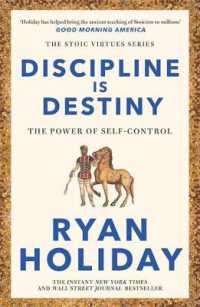
Discipline Is Destiny: The Power of Self-Control from Antiquity to Today
In Discipline Is Destiny, Ryan Holiday continues his exploration of ancient wisdom and its application to modern life, focusing on one of humanity’s most enduring and powerful traits: self-discipline. This book argues that discipline is not a punishment or restriction, but the very foundation upon which freedom, success, and fulfillment are built.
The Core Premise
Holiday’s central argument is that discipline is destiny - the choices we make about self-control, restraint, and consistency determine the trajectory of our lives. Far from being a constraint, discipline is the path to true freedom and the ability to shape our own fate.
The book challenges the modern notion that freedom means doing whatever we want, instead proposing that real freedom comes from mastering our impulses and making deliberate choices about how we spend our time and energy.
Historical Foundations
Drawing on examples from ancient history, philosophy, and military strategy, Holiday illustrates how discipline has been the common thread among humanity’s greatest achievers:
Ancient Philosophers
The book explores how Stoic philosophers like Marcus Aurelius, Epictetus, and Seneca viewed discipline as essential to living a virtuous and fulfilling life. Their teachings on self-mastery and emotional regulation remain relevant today.
Military Leaders
Holiday examines how military leaders throughout history, from Alexander the Great to Cato the Younger, used discipline to achieve remarkable victories and maintain their integrity in the face of adversity.
Cultural Figures
The book also looks at artists, writers, and thinkers who demonstrated extraordinary discipline in their crafts, from musicians who practiced for hours each day to writers who maintained rigorous writing schedules.
The Three Dimensions of Discipline
Holiday identifies three key dimensions of discipline that are essential for personal growth and success:
1. Discipline of the Mind
This involves controlling our thoughts, managing our reactions to external events, and maintaining focus on what truly matters. It includes practices like:
- Meditation and mindfulness
- Cognitive reframing
- Emotional regulation
- Focused attention and concentration
2. Discipline of the Body
Physical discipline is equally important and includes:
- Regular exercise and physical training
- Proper nutrition and eating habits
- Adequate sleep and rest
- Care for one’s physical health as a foundation for all other achievements
3. Discipline of Action
This dimension focuses on consistent behavior and execution:
- Following through on commitments
- Maintaining routines and habits
- Delaying gratification for long-term goals
- Taking action even when motivation is low
Modern Applications
While drawing heavily on historical examples, Holiday makes the case that these ancient principles are more relevant than ever in our modern, distraction-rich environment:
Digital Discipline
The book addresses the unique challenges of maintaining discipline in the age of smartphones, social media, and constant connectivity.
Work and Productivity
Holiday provides practical advice for applying discipline to professional life, including time management, focus, and goal achievement.
Relationships and Social Discipline
The book explores how discipline applies to interpersonal relationships, communication, and social interactions.
The Paradox of Freedom
One of Holiday’s key insights is the paradox that discipline leads to freedom. By constraining our impulses and making deliberate choices, we actually expand our options and increase our ability to pursue what truly matters to us.
Short-term vs. Long-term Freedom
The book distinguishes between immediate gratification (which feels like freedom but often leads to constraint) and long-term freedom that comes from disciplined action.
Choice Architecture
Holiday explains how discipline helps us create the conditions for better choices, making it easier to do what we know we should do.
Overcoming Obstacles
The book addresses common challenges people face when trying to develop greater discipline:
Motivation vs. Discipline
Holiday distinguishes between motivation (which is fleeting) and discipline (which is reliable) and explains why discipline is a more sustainable path to achievement.
Habit Formation
The book provides practical strategies for building disciplined habits that become automatic over time.
Dealing with Setbacks
Holiday offers advice on how to recover from lapses in discipline and get back on track without falling into self-criticism or giving up entirely.
The Role of Environment
Recognizing that discipline is easier in the right environment, the book discusses:
- How to structure your physical and social environment to support disciplined behavior
- The importance of removing temptations and distractions
- Creating systems and routines that make disciplined action easier
Discipline and Character
Holiday connects discipline to broader questions of character and virtue:
- How discipline builds resilience and grit
- The relationship between discipline and integrity
- How consistent small acts of discipline accumulate into significant life changes
Practical Frameworks
The book provides several practical frameworks for developing and maintaining discipline:
The Daily Practice
Holiday outlines approaches to incorporating discipline into daily routines and rituals.
The Weekly Review
The book suggests regular reflection and adjustment processes to stay on track with disciplinary goals.
The Long-term Perspective
Holiday emphasizes the importance of viewing discipline as a lifelong practice rather than a short-term project.
Related Concepts
The book connects to several broader philosophical and psychological concepts:
Stoicism
As with Holiday’s other works, Stoic philosophy plays a central role in his approach to discipline.
Self-Determination Theory
The book touches on psychological research about autonomy, competence, and relatedness as drivers of human motivation.
Behavioral Economics
Holiday incorporates insights from behavioral economics about how people make decisions and how to structure choices for better outcomes.
Critiques and Counterarguments
The book acknowledges potential criticisms of the emphasis on discipline:
- The risk of becoming overly rigid or perfectionist
- The importance of balance and flexibility
- Recognizing when discipline might be applied in unhelpful ways
Conclusion
Discipline Is Destiny offers a compelling argument that self-discipline is not just a nice-to-have character trait but a fundamental determinant of life outcomes. By drawing on wisdom from across centuries and cultures, Ryan Holiday provides both inspiration and practical guidance for anyone seeking to develop greater self-mastery.
The book’s central message is that while we cannot control everything that happens to us, we can control how we respond, and that control - exercised through discipline - is where our power to shape our destiny truly lies. By embracing discipline not as a burden but as a path to freedom, readers can unlock their potential and create the lives they truly want to live.
Through historical examples, practical advice, and philosophical insights, Discipline Is Destiny provides a roadmap for transforming our relationship with self-control and using it as a tool for lasting personal growth and success.