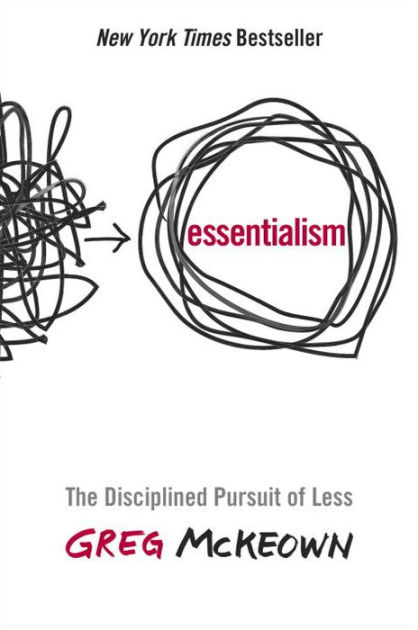
Essentialism: The Disciplined Pursuit of Less
Greg McKeown’s Essentialism challenges the common assumption that success comes from doing more, presenting a compelling alternative: that success comes from doing the right things. The book introduces Essentialism as a systematic discipline for getting only the essential things done, helping individuals and organizations eliminate the non-essential and make the most of their time and energy.
The Central Premise: Choosing with Intention
McKeown’s core argument is that we can’t have it all or do it all, but we can choose to make our highest contribution by focusing on what is truly essential. He distinguishes Essentialism from what he calls “the undisciplined pursuit of more”—the default approach that characterizes much of modern life.
The book is built on a simple but powerful idea: by focusing our time and energy on fewer things, we can accomplish more of what truly matters.
Part I: Essence
The Way of the Essentialist
McKeown describes three stages in the journey to becoming an Essentialist:
- The Non-Essentialist: Those who believe they have no choice but to react to everything
- The Failed Essentialist: Those who try to be Essentialists but revert to old habits under pressure
- The Essentialist: Those who have fully embraced the mindset and consistently practice it
The Paradox of Success
McKeown explores how success can become a trap, leading to more demands and opportunities that dilute focus. He argues that the solution is not to decline success but to become more selective about how to invest in it.
The Clarity of Purpose
Essentialists understand that they have a specific purpose or contribution to make and that not everything is equally important to that purpose. This clarity becomes the foundation for all decisions.
Part II: Explore
Discernment: The Fine Art of Knowing What Matters
Essentialists develop the skill of discernment—the ability to distinguish between what is essential and what is not. This requires clarity about their purpose and values.
Tools for Discernment
- The Essential Intent: Identifying the one goal that matters most
- The 90 Percent Rule: Evaluating opportunities based on whether they meet 90% of the criteria
- Looking for Signals in the Noise: Identifying patterns that reveal what truly matters
Play: Essential for Exploration
McKeown argues that play is not a luxury but a necessity for creativity and exploration. Essentialists make time for play to discover what truly matters and to maintain their ability to think clearly.
Sleep: Protecting the Asset
Rather than treating sleep as a luxury, Essentialists see it as a priority. McKeown shows how adequate sleep is essential for the cognitive function needed to make good decisions and focus on what matters.
Select: The Power of Extreme Criteria
Essentialists use extreme criteria to evaluate opportunities, making it easier to say “no” to good things in order to focus on what is truly essential.
Part III: Eliminate
The Freedom of Setting Boundaries
Essentialists set clear boundaries to protect their essential time and energy. McKeown explains that boundaries are not barriers but frameworks that give freedom to focus.
Strategies for Setting Boundaries
- Saying “no” gracefully but firmly
- Creating buffers to prevent overcommitment
- Trading low-value activities for high-value ones
- Removing obstacles that prevent progress on essential activities
The Power of Saying “No”
McKeown provides practical strategies for saying “no” without damaging relationships:
- Using the “pause” technique to avoid knee-jerk yeses
- Offering alternatives rather than just declining
- Being clear about what you are saying yes to when you say no
The Freedom of Uncommitting
Essentialists regularly review their commitments and uncommit from non-essentials. This requires the courage to admit when something that once seemed important no longer is.
The Art of the Unrequestable
Essentialists learn to identify requests that are clearly not essential and decline them without explanation or guilt.
Part IV: Execute
The Power of Doing Less
Essentialists focus on the minimum viable progress—the smallest step that still creates meaningful value. This approach prevents perfectionism and keeps essential projects moving forward.
The Power of Routine
McKeown shows how Essentialists create systems and routines that make execution easier:
- Building triggers that remind them of essential activities
- Creating routines that support their essential intent
- Eliminating obstacles to essential activities
The Power of the Right Way
Essentialists invest time upfront to do things right rather than rushing into action and having to redo work later. This approach may seem slower initially but leads to faster progress overall.
The Power of the Present Moment
Essentialists focus intensely on the present moment and the task at hand rather than multitasking or worrying about other responsibilities. This focused attention leads to higher quality work and greater satisfaction.
Key Concepts and Principles
The Essentialist Mindset
The Essentialist mindset is characterized by:
- Clarity: The ability to discern what truly matters from what doesn’t
- Dexterity: The skill to eliminate what doesn’t matter without question
- Grace: The strength to do less but better, with less stress and greater joy
The 80/20 Rule (Pareto Principle)
McKeown applies the Pareto Principle to show that 80% of results typically come from 20% of efforts. Essentialists identify and focus on that vital 20%.
The Concept of Trade-Offs
Essentialists understand that every choice has a trade-off. They make these trade-offs deliberately rather than by default, choosing what to focus on and what to放弃.
The Importance of Rest
Rather than seeing rest as a luxury, Essentialists understand that rest and recovery are essential to sustained high performance.
Practical Applications
For Individuals
- Develop clarity about your essential intent
- Practice the art of discernment to distinguish essential from non-essential
- Set boundaries to protect your essential time and energy
- Create systems and routines that make execution easier
- Focus intensely on one task at a time
For Leaders and Managers
- Help team members identify their essential contributions
- Create environments that support focused work
- Model the practice of saying “no” to non-essentials
- Build systems that eliminate obstacles to essential work
- Recognize that protecting team members’ time is a leadership responsibility
For Organizations
- Develop a culture that values focus over busyness
- Create processes for evaluating projects based on essential criteria
- Build systems that make it easier to do essential work
- Eliminate meetings and processes that don’t add value
- Recognize that doing less can lead to better results
The Impact of “Essentialism”
Since its publication in 2014, Essentialism has had a significant impact:
- It became a #1 New York Times bestseller
- It has been translated into over 30 languages
- It has influenced how people think about productivity and focus
- It has been adopted by major corporations and organizations worldwide
- It has spawned a movement of people seeking to live more intentionally
Criticisms and Considerations
While widely praised, McKeown’s approach has faced some criticism:
- Some argue that the approach may not work in all job contexts where saying “no” is not an option
- Others question whether the philosophy applies equally across different cultures and economic circumstances
- The focus on individual choice may overlook systemic factors that limit people’s options
Conclusion
Essentialism provides a powerful framework for living and working with greater focus and intention. McKeown’s insights help readers:
- Recognize that they can’t do everything and must choose what matters most
- Develop the skills of discernment to distinguish essential from non-essential
- Eliminate the non-essential to free up time and energy for what truly matters
- Execute with excellence on their essential priorities
The book’s enduring popularity reflects a widespread need for guidance on how to focus in an age of constant distraction and competing demands. McKeown’s systematic approach and practical tools make the principles of Essentialism accessible and actionable.
Whether you’re an individual seeking to reduce stress and increase satisfaction, a leader trying to help your team focus, or an organization looking to improve productivity, Essentialism provides valuable tools for achieving your goals.
McKeown’s central message is empowering: by choosing to focus on fewer things, we can accomplish more of what truly matters. The key is not to do less but to do less but better.
The book ultimately encourages readers to stop trying to do everything and start focusing on doing the right things well. It’s a call to action that recognizes the reality of modern demands while providing a clear path toward greater effectiveness and satisfaction.