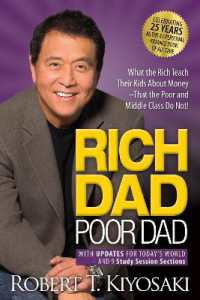
Rich Dad Poor Dad: A New Perspective on Money and Wealth
“Rich Dad Poor Dad” by Robert T. Kiyosaki is a groundbreaking personal finance book that has challenged conventional wisdom about money and wealth creation since its publication in 1997. The book contrasts the financial philosophies of two influential father figures in Kiyosaki’s life: his “Poor Dad” (his highly educated biological father) and his “Rich Dad” (the entrepreneurial father of his best friend).
Key Lessons and Principles
The central theme of “Rich Dad Poor Dad” revolves around the idea that financial education is crucial for achieving financial independence. Kiyosaki argues that the traditional educational system often fails to teach people about money, leading many to a lifelong struggle with finances. The book highlights several key principles:
- Assets vs. Liabilities: A fundamental concept introduced is the clear distinction between assets (things that put money in your pocket) and liabilities (things that take money out of your pocket). Kiyosaki emphasizes that many people mistakenly believe their home is an asset when it can often be a liability.
- Work for Assets, Not for Money: The book advocates for acquiring income-generating assets rather than solely relying on a paycheck. It encourages readers to build businesses, invest in real estate, and create passive income streams.
- Financial Literacy: Kiyosaki stresses the importance of understanding accounting, investing, and markets. He argues that financial intelligence is a skill that can be learned and developed, regardless of one’s formal education.
- The Power of Corporations: The book explains how corporations can be used as vehicles for wealth creation and tax advantages.
- Mindset and Risk-Taking: “Rich Dad Poor Dad” encourages readers to adopt an entrepreneurial mindset, overcome the fear of failure, and take calculated risks to achieve financial success.
Challenging Conventional Wisdom
Kiyosaki’s book challenges many commonly held beliefs about money, such as the idea that a high-paying job or a large house automatically leads to wealth. Instead, he promotes the idea of financial freedom through smart investing, entrepreneurship, and continuous financial education. He argues that the poor and middle class often work for money, while the rich make money work for them.
Enduring Impact
“Rich Dad Poor Dad” has sold millions of copies worldwide and has been translated into numerous languages, becoming a foundational text in the personal finance genre. Its straightforward language and compelling narrative have resonated with a wide audience, inspiring countless individuals to take control of their financial futures and pursue paths to wealth creation outside of traditional employment. Despite some criticisms, its core messages about financial literacy and asset building continue to influence aspiring entrepreneurs and investors globally.