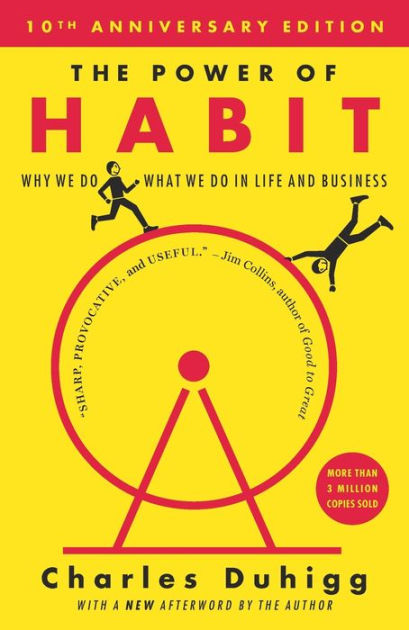
The Power of Habit
The Power of Habit is a groundbreaking exploration of the science behind habit formation and change by award-winning journalist Charles Duhigg. Drawing on cutting-edge research from neuroscience, psychology, and business, Duhigg reveals why habits exist, how they work, and most importantly, how they can be transformed to improve our personal and professional lives.
The Habit Loop
At the heart of Duhigg’s framework is the “habit loop,” a three-step neurological process that forms every habit:
- Cue: A trigger that tells your brain to go into automatic mode and which habit to use
- Routine: The behavior itself, which can be physical, mental, or emotional
- Reward: The positive feeling or outcome that helps your brain figure out if this particular loop is worth remembering for the future
This simple loop is the foundation for understanding how habits form and how they can be changed.
The Golden Rule of Habit Change
Duhigg introduces the “Golden Rule of Habit Change,” which states that you can’t extinguish a bad habit, but you can change it by keeping the old cue and delivering the same reward while inserting a new routine. This principle is crucial for understanding how lasting habit change is possible.
Keystone Habits
One of the most powerful concepts in the book is that of “keystone habits” - specific habits that, when changed, can trigger widespread transformation in our lives and organizations. Duhigg shows how focusing on these pivotal habits can lead to cascading positive changes throughout our behavior patterns.
Examples of keystone habits include:
- Regular exercise, which often leads to better eating habits and increased productivity
- Making your bed, which can create a sense of accomplishment that carries through the day
- Keeping a detailed record of eating, which naturally leads to better food choices
Willpower as a Habit
Duhigg explores research showing that willpower is not a fixed trait but rather a skill that can be strengthened like a muscle. By treating self-control as a habit, individuals can develop greater capacity for resisting temptation and sticking to their goals.
The Role of Belief in Habit Change
The book emphasizes that belief is a crucial component of lasting habit change. Duhigg shows how belief in oneself and in the possibility of change can be the difference between temporary modifications and permanent transformation.
Habits in Organizations
Duhigg extends his analysis from individual habits to organizational habits, showing how companies and institutions develop cultural patterns that can either drive success or lead to failure. He examines how organizations can transform their institutional habits to improve performance and culture.
Key organizational concepts include:
- The importance of strong leadership in driving habit change
- How companies like Alcoa transformed their safety culture through habit modification
- The role of “small wins” in creating momentum for larger organizational changes
- How Starbucks trains employees in habit-based self-discipline
Habits in Society
The book also explores how social habits influence movements and societal change. Duhigg examines how civil rights activists and other social movements leveraged the power of habits to create widespread social transformation.
The Neuroscience of Habit Formation
Duhigg delves into the neurological basis of habits, explaining how the brain’s basal ganglia play a crucial role in habit formation. He discusses how habits become automatic through the process of chunking, where the brain converts sequences of actions into automatic routines.
Practical Applications
Personal Transformation
- Identifying your habit loops and understanding what drives your behaviors
- Using the Golden Rule to modify unwanted habits
- Focusing on keystone habits to create broader positive changes
- Building willpower as a habit through regular practice
- Creating supportive environments that make good habits easier
Professional Development
- Understanding how organizational habits influence company culture
- Using keystone habits to drive business transformation
- Creating systems that support positive workplace behaviors
- Leveraging the power of small wins to build momentum
- Developing leadership skills that support habit change
Community and Social Change
- Understanding how social movements leverage habit-based organizing
- Creating supportive social environments for positive behaviors
- Using peer pressure constructively to support habit change
- Building movements that create lasting societal transformation
Case Studies and Examples
Throughout the book, Duhigg presents compelling case studies that illustrate his principles:
Individual Stories
- How a woman lost more than 60 pounds through habit change
- The story of a man who developed compulsive gambling habits
- How exercise became a keystone habit that transformed multiple aspects of a woman’s life
Organizational Examples
- Paul O’Neill’s transformation of Alcoa through focus on safety habits
- How Starbucks built a culture of self-discipline
- The turnaround of Rhode Island Hospital through habit-based changes
Social Movements
- The civil rights movement’s use of habit-based organizing
- How social habits influenced the Montgomery Bus Boycott
The Science Behind the Insights
Duhigg grounds his insights in rigorous scientific research, citing studies from leading researchers in psychology, neuroscience, and behavioral economics. He explains complex research findings in accessible language while maintaining scientific accuracy.
Criticisms and Limitations
While widely praised, the book has faced some criticism:
- Some argue that the emphasis on individual habit change may overlook systemic factors
- Others question whether all behaviors can be understood through the habit loop framework
- The book’s focus on success stories may not fully address the challenges of habit change
Conclusion
The Power of Habit provides a comprehensive framework for understanding how habits shape our lives and how we can change them. Duhigg’s insights help readers:
- Recognize the patterns that drive their behaviors
- Understand why some changes stick while others fail
- Develop strategies for transforming their personal and professional lives
- Appreciate the role of habits in organizational and societal success
The book’s central message is empowering: by understanding the science of habits, we can take control of our behaviors and create positive changes that ripple through all areas of our lives. Whether you’re looking to break a bad habit, establish a positive routine, or transform an organization, The Power of Habit provides the tools and insights needed to succeed.
Duhigg’s work has had a lasting impact on how we think about personal development, organizational behavior, and social change. By revealing the underlying mechanisms of habit formation, he has given readers a roadmap for meaningful transformation based on scientific understanding rather than wishful thinking.