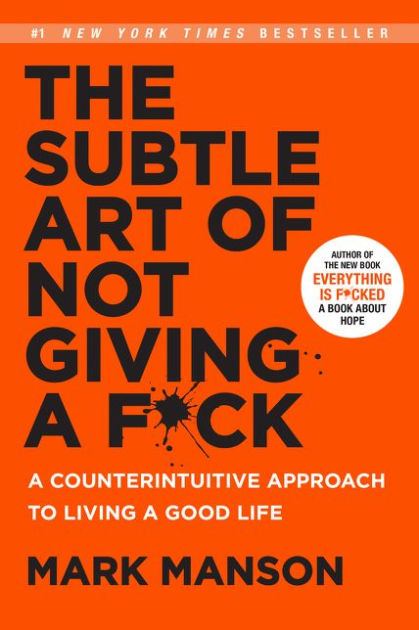
The Subtle Art of Not Giving a F*ck: A Counterintuitive Approach to Living a Good Life
Mark Manson’s The Subtle Art of Not Giving a Fck* challenges conventional self-help wisdom with a counterintuitive approach to living a good life. The book argues that true happiness comes not from trying to be positive about everything, but from being selective about what you care about and taking responsibility for your problems.
The Central Premise: Selective Caring
Manson’s core argument is that we live in a world where everyone is trying to avoid pain and pursue happiness, but this approach often backfires. Instead, he argues that:
- We should be selective about what we care about
- Pain and suffering are inevitable parts of life
- Meaning comes from struggling for something worthwhile
- Happiness is not a destination but a process
The book’s title reflects Manson’s blunt approach to self-help, cutting through the typical positive thinking clichés to deliver practical advice grounded in psychology and philosophy.
Part I: The Problem with Being Positive About Everything
The Backwards Law
Manson introduces the “Backwards Law,” which states that pursuing happiness directly often makes us more miserable. The more we chase positive experiences, the more we suffer from negative ones. This happens because:
- We become more sensitive to negative experiences
- We develop unrealistic expectations
- We avoid necessary discomfort and growth
- We lose perspective on what actually matters
The Tyranny of Choice
In our modern world, we have more choices than ever before, but this abundance of options leads to:
- Decision paralysis
- Constant comparison with others
- FOMO (Fear of Missing Out)
- Decreased satisfaction with our choices
Manson argues that having fewer things to care about leads to greater happiness and fulfillment.
The Paradox of Entitlement
Manson identifies a growing sense of entitlement in modern society:
- Expecting to feel good all the time
- Blaming others for our problems
- Avoiding responsibility for our lives
- Seeking quick fixes and easy solutions
This entitlement mindset leads to greater unhappiness and dissatisfaction.
Part II: The Subtle Art of Not Giving a F*ck
The Choice of What to Care About
Manson argues that we all care about something; the question is what. He suggests that:
- We should care about fewer things, not more
- We should care about things that are within our control
- We should care about things that align with our values
- We should care about things that bring meaning to our lives
Taking Responsibility for Our Problems
A key theme in the book is taking responsibility for our problems:
- Acknowledging that we all have problems
- Accepting that our problems are our responsibility to solve
- Recognizing that avoiding problems leads to greater suffering
- Understanding that solving problems is how we grow
The Importance of Values
Manson emphasizes the importance of having good values:
- Our values determine what we care about
- Good values are reality-based and socially constructive
- Bad values are fantasy-based and self-centered
- Choosing the right values is crucial for happiness
Part III: How to Be Yourself (And Why That’s Important)
The Problem with Self-Esteem
Manson critiques the self-esteem movement:
- High self-esteem doesn’t necessarily lead to better outcomes
- Self-compassion is more important than self-esteem
- Focusing on self-esteem can lead to narcissism
- True self-worth comes from competence and contribution
Embracing Vulnerability
The book emphasizes the importance of vulnerability:
- Being honest about our struggles and limitations
- Accepting that we’re not perfect
- Sharing our authentic selves with others
- Recognizing that vulnerability creates deeper connections
The Importance of Rejection
Manson argues that rejection is necessary for a good life:
- Rejection helps us set boundaries
- Rejection teaches us about our values
- Rejection builds resilience
- Rejection leads to better relationships and opportunities
Part IV: The Value of Suffering
Pain Is Inevitable, Suffering Is Optional
One of Manson’s key insights is the distinction between pain and suffering:
- Pain is a natural part of life
- Suffering is our reaction to pain
- We can control our suffering by changing our perspective
- Accepting pain leads to less suffering
The Purpose of Struggle
Manson argues that struggle is necessary for growth:
- Without struggle, we don’t develop strength
- Without challenges, we don’t learn resilience
- Without difficulties, we don’t appreciate good times
- Meaning comes from overcoming obstacles
Death and Meaning
The book explores how confronting mortality gives life more meaning:
- Death makes our time more precious
- Mortality helps us prioritize what matters
- Accepting death reduces anxiety about it
- Facing mortality leads to more authentic living
Key Concepts and Principles
The Responsibility/Fault Fallacy
Manson distinguishes between responsibility and fault:
- We can be responsible for problems without being at fault
- Taking responsibility leads to growth and solutions
- Blaming others keeps us stuck in victimhood
- Responsibility empowers us to make changes
The Importance of Being Wrong
The book emphasizes the importance of being wrong:
- Being wrong helps us learn and grow
- Admitting mistakes shows strength, not weakness
- Changing our minds is a sign of intelligence
- Humility leads to better decision-making
The Danger of Feeling Special
Manson warns against the need to feel special:
- Everyone wants to feel special, which makes no one special
- True specialness comes from our actions, not our feelings
- Focusing on being special leads to entitlement
- Contributing to something meaningful is more important than feeling special
Practical Applications
For Personal Growth
- Identify and prioritize your core values
- Take responsibility for your problems
- Embrace vulnerability and imperfection
- Accept that pain is a natural part of life
For Relationships
- Be honest about your struggles and limitations
- Set boundaries and accept rejection
- Focus on deep connections rather than many shallow ones
- Communicate authentically rather than trying to impress
For Career and Success
- Focus on contribution rather than achievement
- Choose work that aligns with your values
- Embrace challenges and learn from failures
- Prioritize meaning over money or status
For Mental Health
- Accept difficult emotions rather than avoiding them
- Focus on what you can control
- Practice self-compassion rather than self-esteem
- Seek help when you need it
Real-World Examples
Throughout the book, Manson shares compelling examples:
- Relationships: How focusing on being right destroys connections
- Career: How pursuing passion without considering market realities leads to disappointment
- Health: How avoiding discomfort leads to greater long-term problems
- Personal Development: How self-help obsession can become a problem in itself
The Impact of “The Subtle Art of Not Giving a F*ck”
Since its publication in 2016, the book has had a significant impact:
- It became a #1 New York Times bestseller
- It has been translated into dozens of languages
- It has influenced how people think about happiness and success
- It has spawned countless articles and discussions about the “not giving a f*ck” philosophy
Criticisms and Considerations
While widely praised, Manson’s approach has faced some criticism:
- Some argue that his profanity and blunt language may not be appropriate for all audiences
- Others question whether his approach works for people with serious mental health issues
- The focus on individual responsibility may overlook systemic barriers to success
- Some find his approach too cynical or pessimistic
Conclusion
The Subtle Art of Not Giving a Fck* provides a refreshing counterpoint to conventional self-help wisdom. Manson’s insights help readers:
- Understand that happiness comes from selective caring, not positive thinking
- Take responsibility for their problems rather than blaming others
- Embrace pain and struggle as necessary parts of growth
- Focus on values and meaning rather than achievements and status
The book’s enduring popularity reflects a widespread need for honest, practical advice about how to live a good life. Manson’s combination of psychological insights, philosophical wisdom, and real-world examples makes the concepts accessible and actionable.
Whether you’re feeling overwhelmed by life’s choices, struggling with self-esteem issues, or simply looking for a more authentic approach to happiness, The Subtle Art of Not Giving a Fck* provides valuable insights for achieving a more meaningful and fulfilling life.
Manson’s central message is empowering: you don’t need to feel good all the time to live a good life. By being selective about what you care about and taking responsibility for your problems, you can create a life that’s truly worth living.
The book ultimately encourages readers to embrace life’s difficulties rather than avoid them, to focus on what truly matters rather than what makes them feel good, and to find meaning in struggle rather than in constant happiness.